Natural Companions: A Botanical Art Collection on Plant Kinship
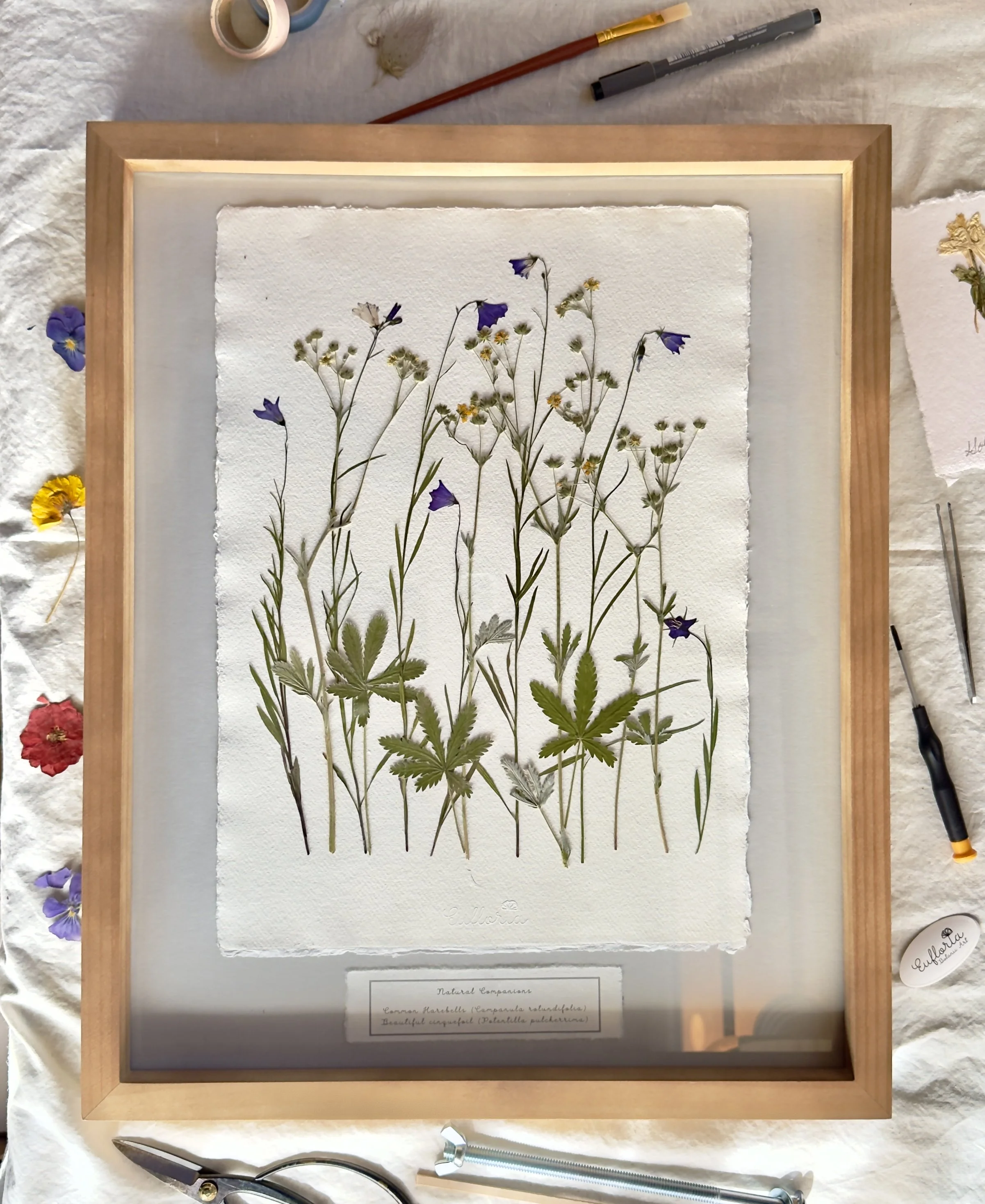
In nature, solitude is rare. When I walk through forests, fields, and gardens, I’m always aware that what I see above ground is only part of the story. Beneath the surface, plants are in constant conversation—sharing space, exchanging nutrients, and supporting one another through intricate underground networks. Natural Companions grew from my desire to honor these relationships and the quiet intelligence of plants that choose to grow together.
Over time, I’ve come to understand that many plants thrive not in isolation, but in partnership. Legumes enrich the soil with nitrogen for their neighbors. Deep-rooted species draw minerals upward, making them available to shallow-rooted companions. Through mycorrhizal fungi growing in the soil of forests—often called the “wood wide web”—plants transfer carbon, water, and chemical signals through their roots, strengthening the whole community. What appears as simple coexistence is, below the surface, an ongoing act of care.
My way of seeing plants as relational rather than solitary has been deeply influenced by my past studies of ecology and more recently by botanist and Potawatomi scholar Robin Wall Kimmerer. Her writing, especially in Braiding Sweetgrass, helped me name much of what I already felt while working with plants. Her more recent book The Serviceberry emphasized that the natural world is shaped by reciprocity. Plants are not merely resources or specimens—they are participants in a living community built on generosity, attentiveness, and mutual support.
Kimmerer’s reflections on the serviceberry have been especially meaningful to me. She describes the serviceberry as a teacher of abundance, offering its fruit freely to birds, animals, and people, trusting that its gifts will be returned through seed dispersal and care. This gift-based relationship mirrors what happens underground, where nourishment is shared rather than hoarded. It’s a reminder that thriving is sustained through giving.
Each piece in the Natural Companions Collection pairs plant species that I’ve noticed grow together at different times of the season, sharing habitat and prompting me to wonder how they might be communicating through air or soil. As I press and arrange them, I think about balance—how each plant makes space for the other, how their forms echo or contrast, how their relationship is held in a single frame. Preserved at their peak, the plants become enduring portraits of shared growth and quiet cooperation.
Through Natural Companions, I invite viewers to slow down and notice these unseen exchanges. In a culture that often celebrates independence, plants offer a different wisdom: that resilience is communal, that beauty emerges through relationship, and that we are strongest when we grow together.
In pressing these plants, I don’t aim to separate them from their story, but to preserve it—a story of companionship, cooperation, and the profound wisdom woven into the roots of the natural world.
Contact Me to Purchase from the Natural Companions Collection ->