In Praise of Quiet Things: An Introduction to the New Collection, a Tribute to Mary Oliver
My first introduction to Mary Oliver was while I was living in Jackson Hole, Wyoming and working at the Teton Science School in my early 20s. One of my colleagues, a man several years older than me, recited a Mary Oliver poem to me while staring into my eyes without breaking contact, in front of several of our friends. He seemed a bit desperate for a companion and thought this was a way to cultivate one. I was not interested in him, however, so the experience was awkward and embarrassing for me. Thus, I avoided Mary Oliver and her poems at all costs for decades after that.
Still, anyone who loves nature and the simple practice of paying attention, cannot avoid Mary Oliver forever. In talking with friends, listen to scientists and poets and creatives that I admire, and conversing with strangers I meet through my botanical art practice, conversations keep pointing me back to Ms. Oliver. Recently, I’ve pushed through my resistance to her and taken a deep dive into her world through her words. And I’m so glad I did. I find myself resonating deeply with her words and perspective on life.
It’s with joy that I’ve created a collection in tribute to her, influenced by her poetry, and our shared love and faith that the simple practice of paying attention to nature will teach us how to be on this earth and lead us in a good way.
UNPACKING VIOLETS, THE POEM
VIOLETS
Down by the rumbling creek and the tall trees-
Where I went truant from school three days a week
And therefore broke the record-
There were violets as easy in their lives
As anything you have ever seen
Or leaned down to intake the sweet breath of.
Later, when the necessary houses were built
They were gone, and who give significance
To their absence.
Oh, violets, you did signify, and what shall take
Your place?
Mary Oliver’s poem “Violets” offers a meditation on the power of quiet observation and the lessons available to us when we pause long enough to notice the small, often overlooked details of the world. Violets “teach us to be gentle, and humble, and faithful,” she says, not through any spoken wisdom, but simply by existing—small, low to the ground, and beautifully unassuming. It’s a lesson that feels especially precious in a world that often rewards only what is loud or urgent.
Central to the poem is the idea that nature teaches not through declaration or instruction but through the purity of simply being. The violets do not speak, perform, or demand attention. Instead, they offer themselves as they are, demonstrating that wisdom can emerge from presence alone. Oliver suggests that if we are willing to meet the world with openness, we will find meaning in the quiet moments that surround us.
This act of paying attention becomes, for Oliver, a form of devotion. “Attention is the beginning of devotion,” Oliver wrote in her essay Teach the Children. The simple gesture of kneeling to look at a flower is transformed into a spiritual practice, a way of honoring what is delicate, fleeting, and true. In a world that often encourages us to move quickly and consume experiences without depth, she reminds us that attentive looking is a way to restore connection—to land, to self, to wonder.
The violets also embody a model for living: humble, receptive, and content in their smallness. They remind us that significance does not depend on scale. There is dignity in being grounded, in taking up only the space one needs, in contributing beauty quietly rather than loudly. Oliver positions the violets as guides, suggesting that the qualities we admire in them—stillness, patience, lack of pretense—are qualities worth cultivating in ourselves. “Real attention,” says Oliver, “needs empathy; attention without feeling is just a report.”
Ultimately, “Violets” proposes that transformation arises not from grand revelations but from subtle shifts in perception. The poem underscores the idea that the world is always offering us opportunities to rediscover awe; what changes is our willingness to notice. By bending toward the violets, Oliver invites readers to reconsider their relationship with the natural world and to recognize the profound impact of moments that might otherwise slip by.
THE “DEVOTION” COLLECTION
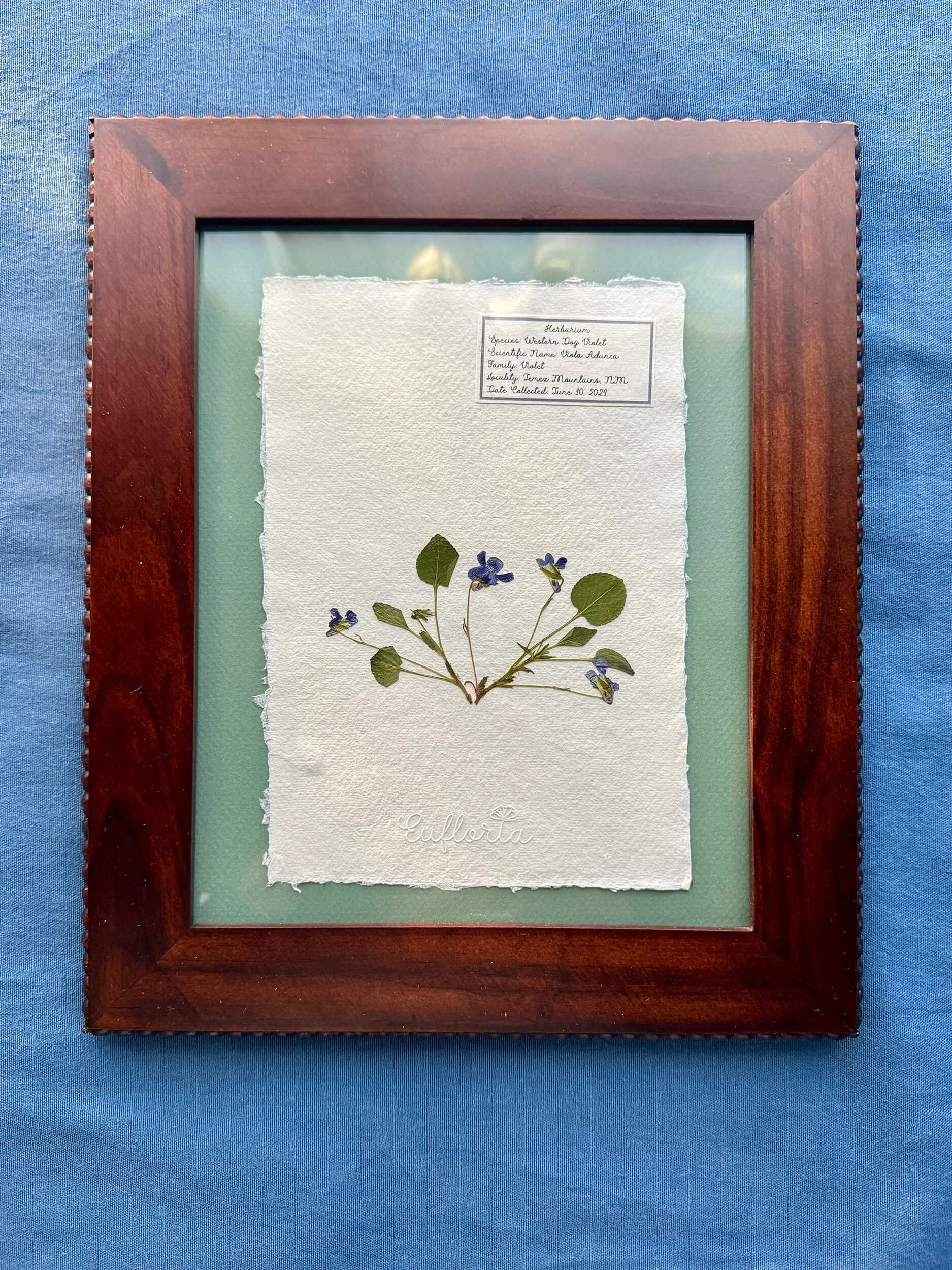
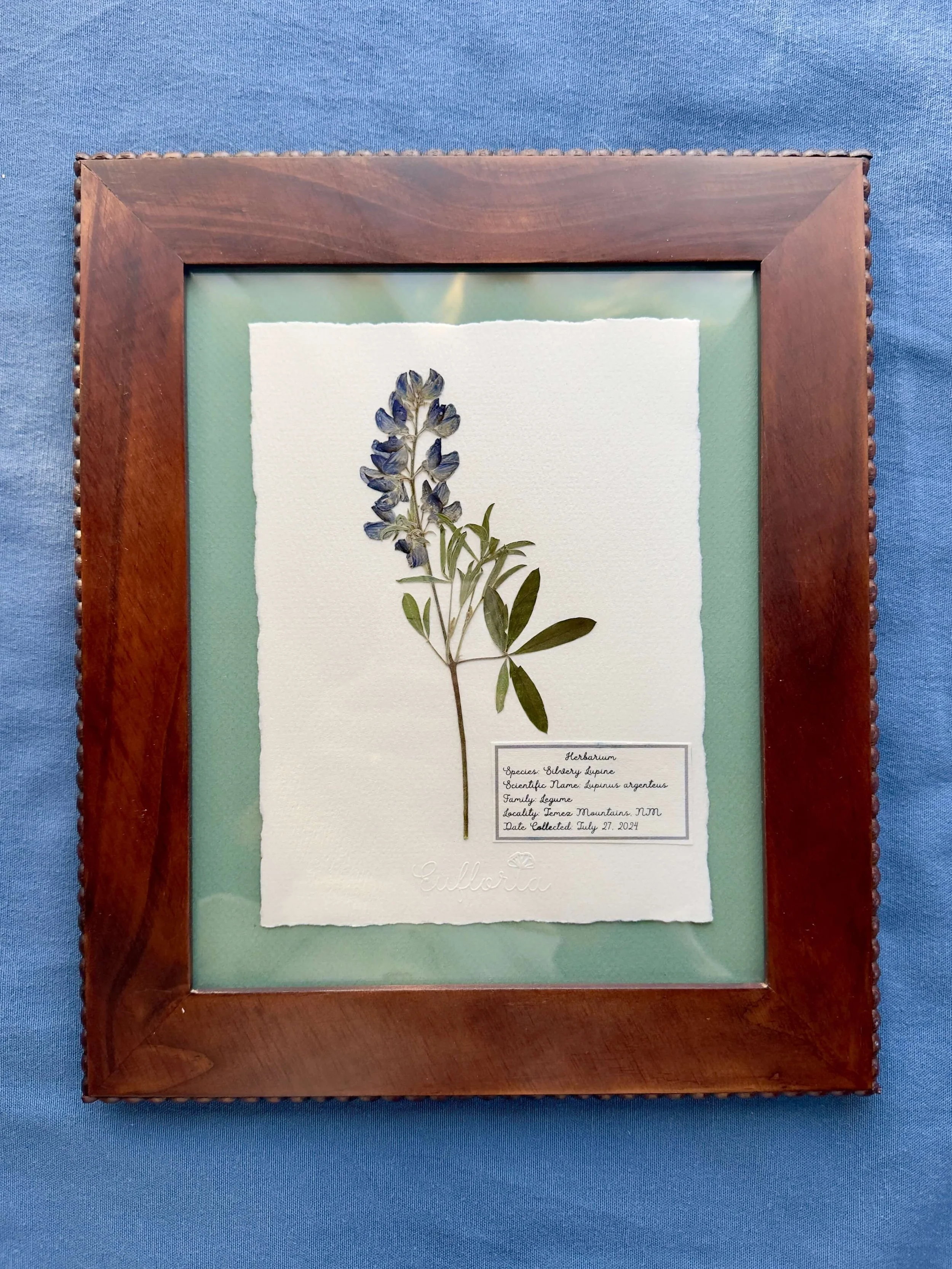
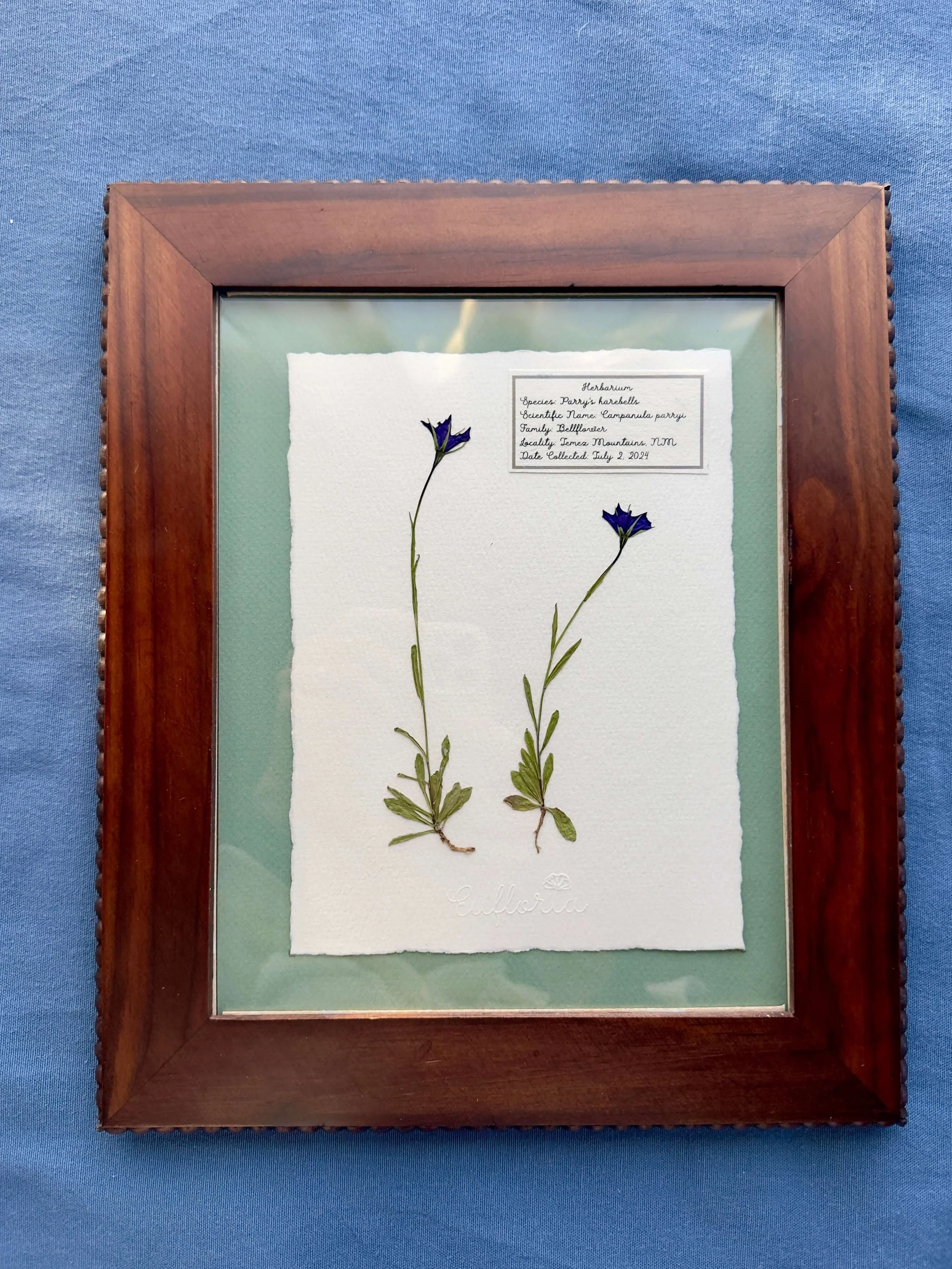
This collection of pressed botanical artworks grew from that same impulse: the desire to honor what is easily overlooked. The violets and purple-hued blossoms gathered here—wild violet, geranium, harebells, lupine, purple asters—were not chosen for their extravagance, but for their subtle presence and their ability to surprise you if you pause long enough to meet them eye-to-eye. Each specimen is a moment of stillness, preserved: a reminder that quiet things carry their own elegance.
I chose to center this botanical art collection around purple flowers because the color purple carries a unique symbolic resonance that mirrors the spirit of the work. Purple embodies the unknown, the mystical, and the realm of deep insight—a bridge between the physical world of petals and stems and the more spiritual, contemplative space that art and nature often open within us. It is a color long associated with imagination and creative possibility, suggesting magic, intuition, and the courage to explore beyond what is immediately visible. Across cultures and faiths, purple has also been linked to the divine, a shade that gestures toward reverence and heightened awareness. This feels especially fitting in the context of Mary Oliver’s practice, which was both deeply spiritual and profoundly rooted in the physical world. To gather and press these purple flowers, then, is to honor that intersection: a celebration of beauty that is grounded yet otherworldly, quiet yet full of mystery.
Pressing plants is itself an act of attentive devotion. It asks you to slow down, to choose a stem with care, to observe the delicate veining of a petal or the way color concentrates at an edge. Over days and weeks, the plant yields its moisture and becomes something new—transformed, but still true to its original essence. What remains is a fragile archive of place and season, of wandering walks and the soft pleasure of noticing.
In bringing these violets and purple flowers together, I hope to create a small sanctuary for the contemplative eye. Each piece is an invitation to lean close. To trace the curve of a leaf. To remember that beauty is often quiet, and that the world offers its gentlest gifts without fanfare.
May this collection encourage you, as Mary Oliver encouraged so many, to pay attention. To look down as often as you look up. And to let the smallest flowers remind you of the grace found in stillness.