 Image 1 of 1
Common Harebells (Campanula rotundifolia)
from $80.00
Common Harebells (Campanula rotundifolia)
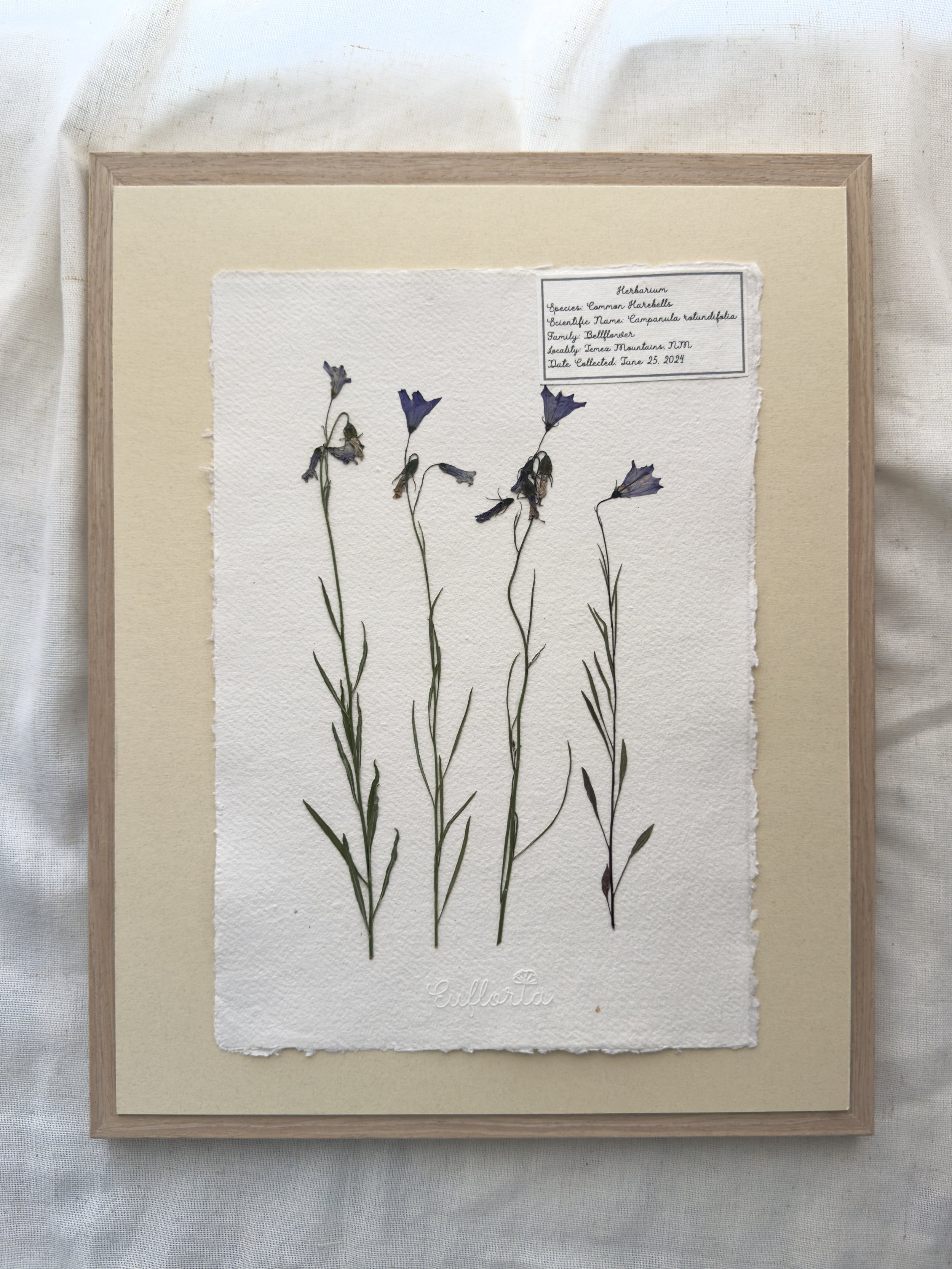
Summer in the high country. The Common Harebell grows all summer in alpine and subalpine meadows on thin, delicate stems, its bell-shaped flowers nodding in the mountain breeze—a plant that thrives in rocky terrain where most others struggle. This specimen was pressed at the height of bloom, capturing that particular moment when the Jemez meadows were full of them.
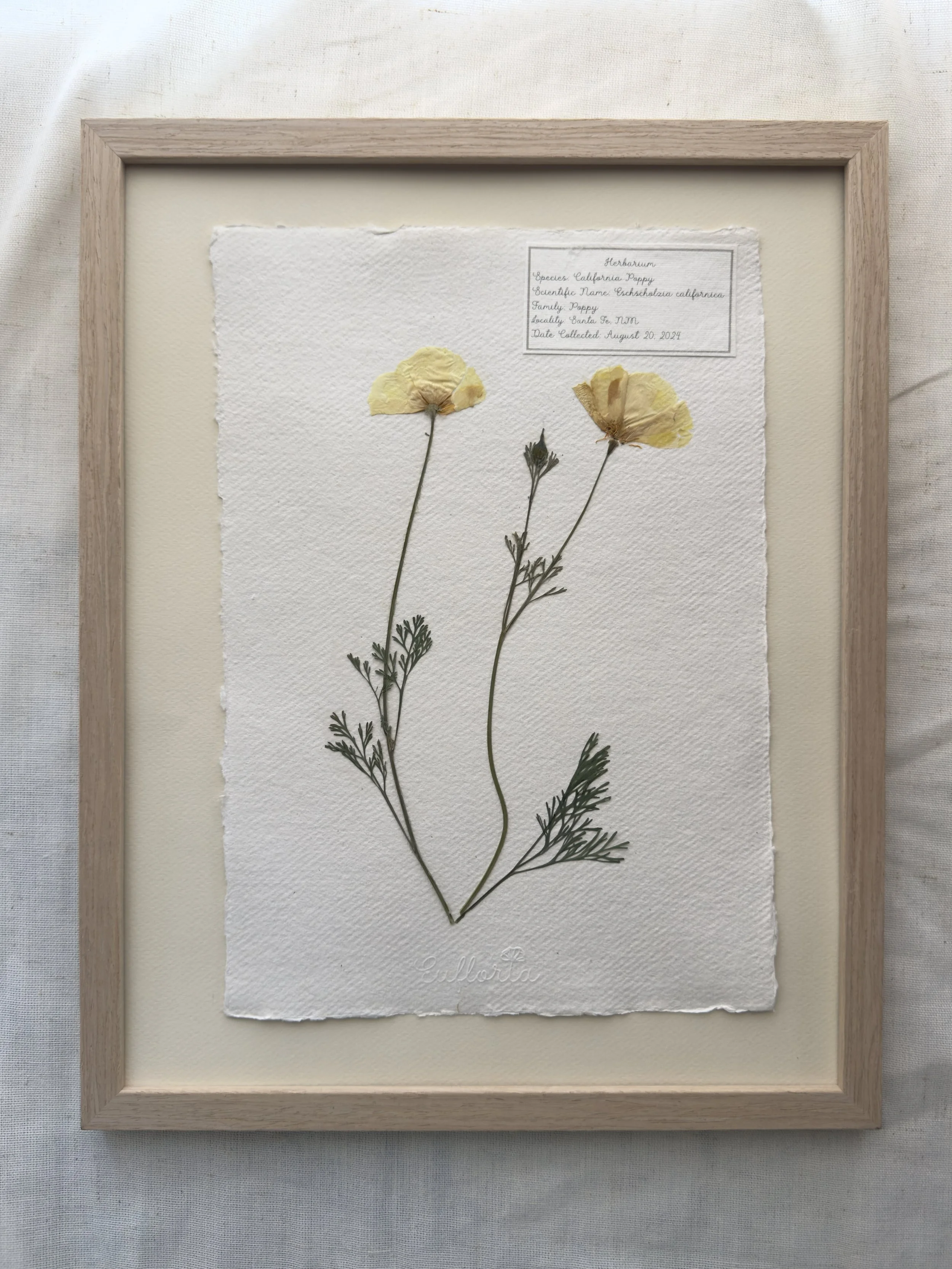
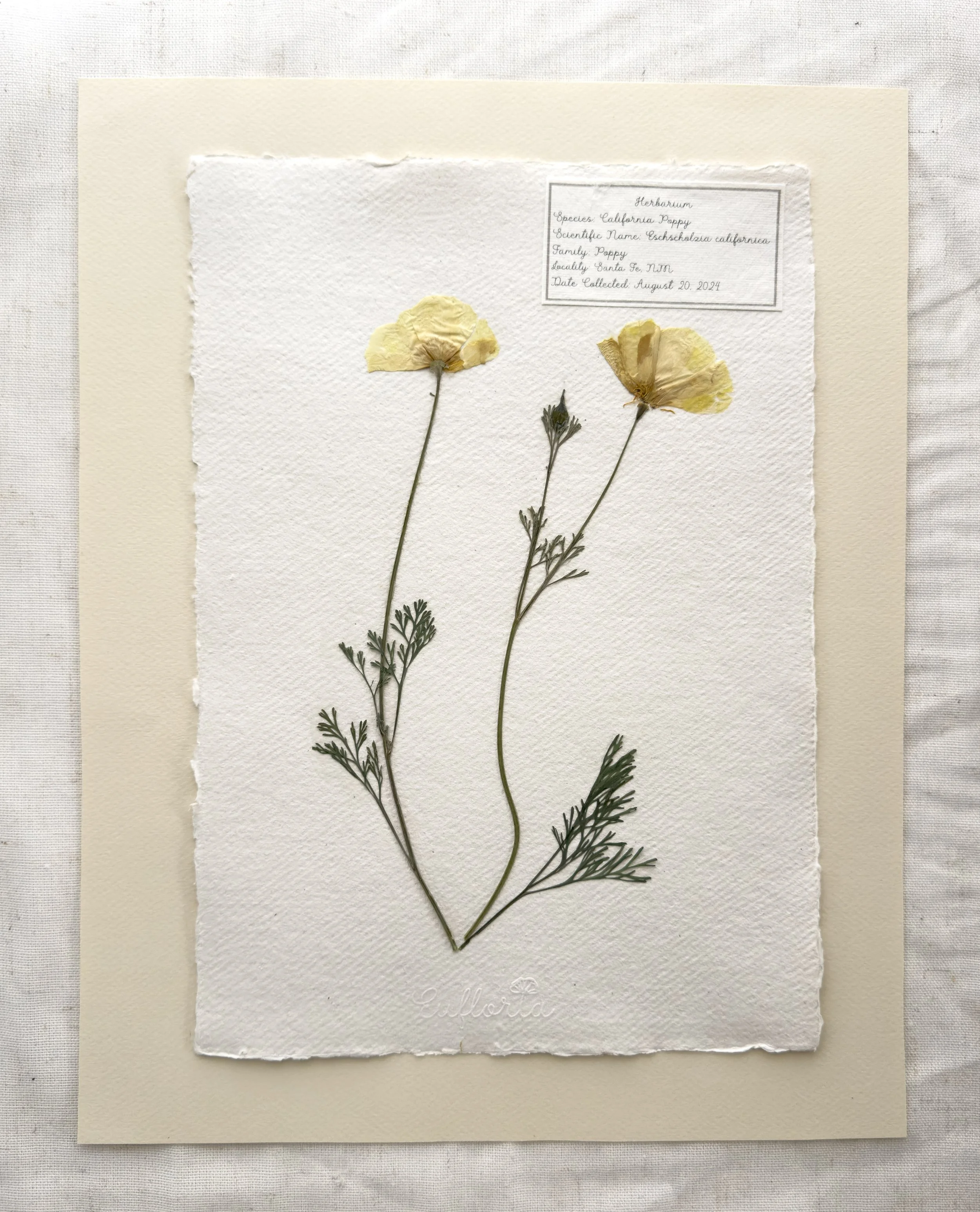
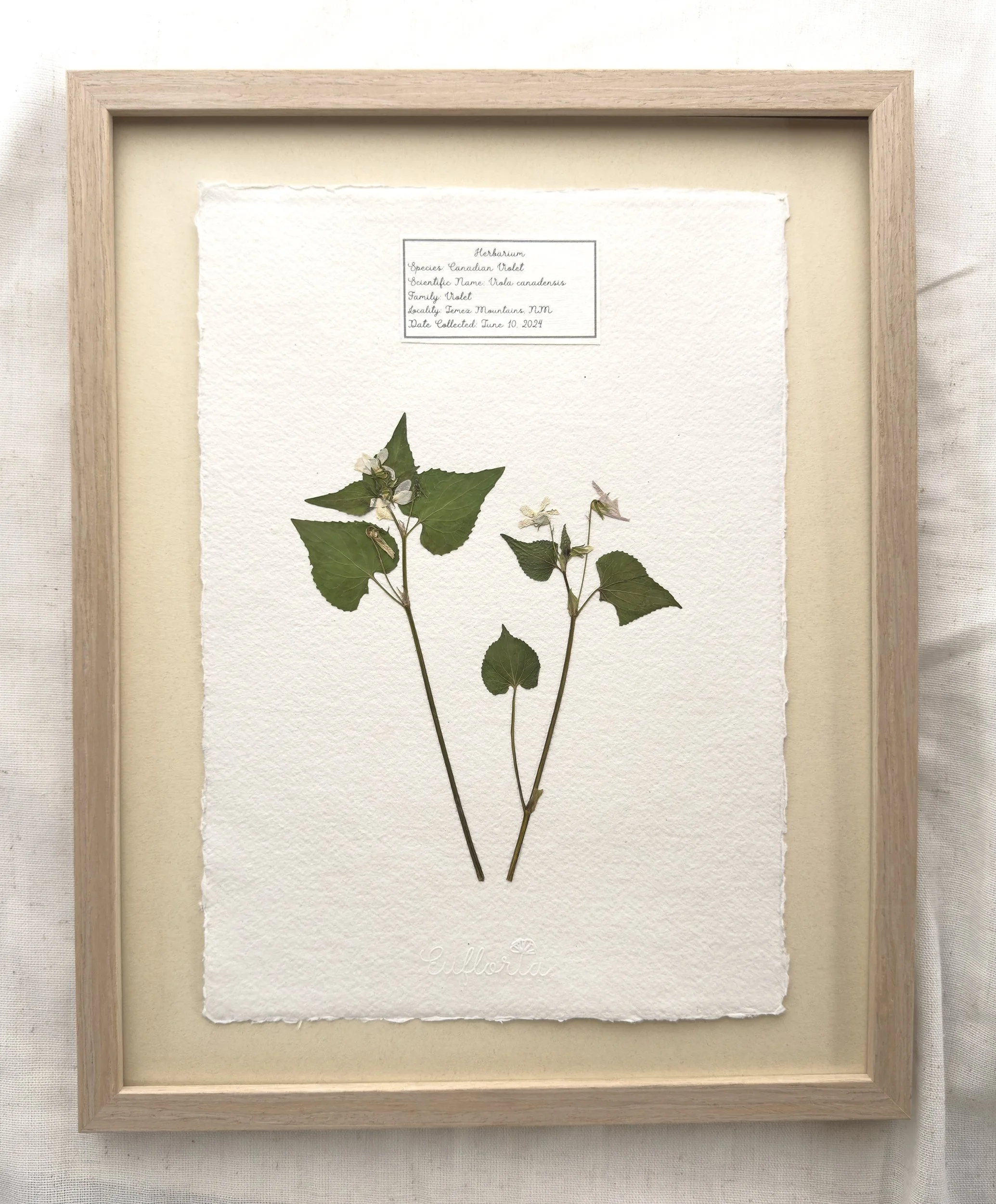
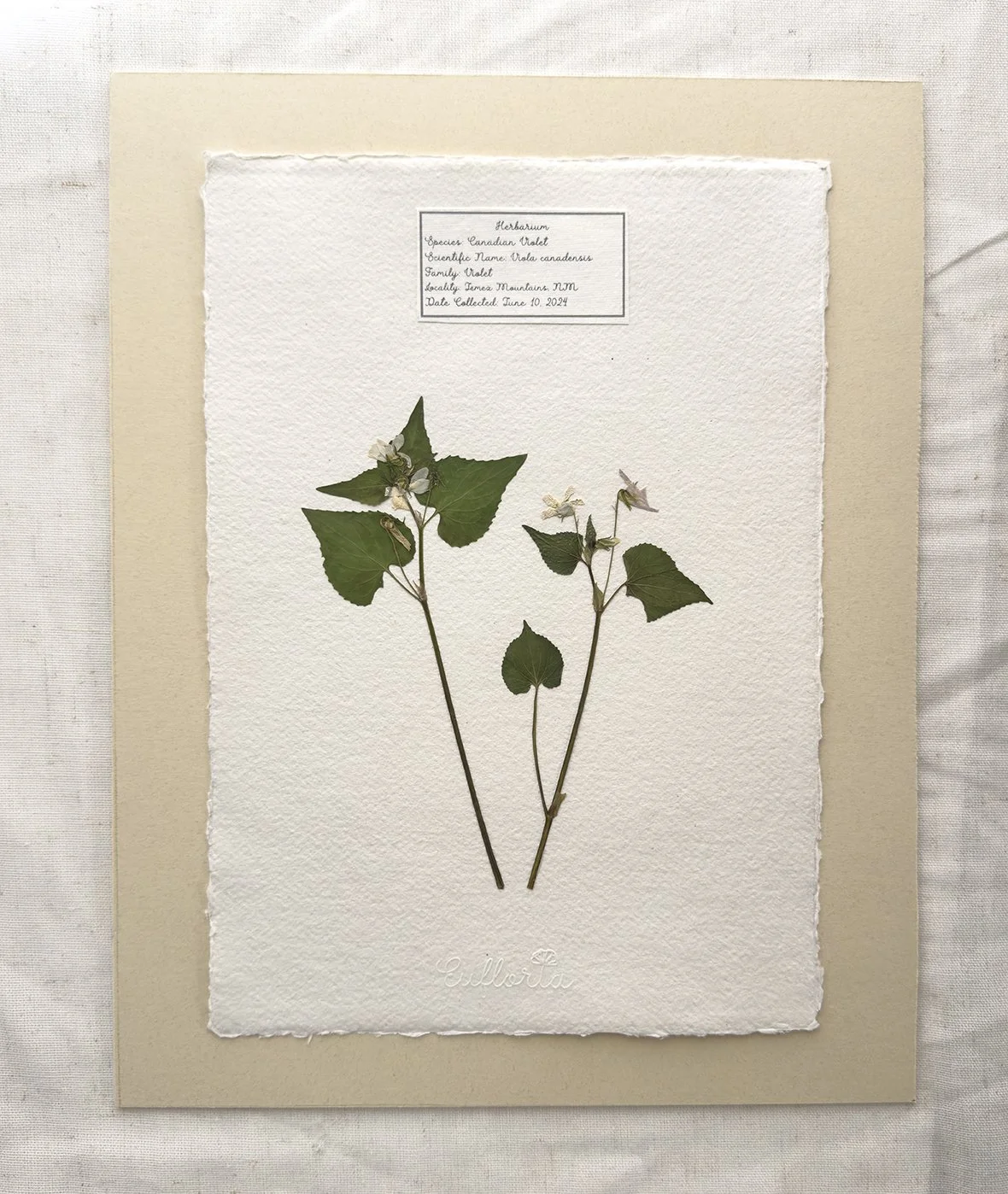
11×14, mounted on handmade watercolor paper, framed in natural oak with off-white archival matboard. Ready to hang. A specimen label documents the plant's origin, date, and location. This is a record of one specific place and one particular season.
As with all pressed plants, these will gradually shift in color over time. Blue and purple pigments—anthocyanins—are particularly susceptible to fading. They're water-soluble and break down readily under light and oxidation, which is why some of these harebells have faded toward white or pale lavender. This is natural and expected; the flowers will continue to develop that soft, aged quality. Keep them out of direct sunlight and away from moisture to slow this process. The plant has been pressed for a minimum of six weeks following professional herbarium standards to maximize quality and longevity.
Gathered responsibly from the subalpine meadows of the Jemez Mountains, following wildcrafting and Honorable Harvest guidelines. Learn more about my approach to wildflower harvesting and conservation here.
Common Harebells (Campanula rotundifolia)
Summer in the high country. The Common Harebell grows all summer in alpine and subalpine meadows on thin, delicate stems, its bell-shaped flowers nodding in the mountain breeze—a plant that thrives in rocky terrain where most others struggle. This specimen was pressed at the height of bloom, capturing that particular moment when the Jemez meadows were full of them.
11×14, mounted on handmade watercolor paper, framed in natural oak with off-white archival matboard. Ready to hang. A specimen label documents the plant's origin, date, and location. This is a record of one specific place and one particular season.
As with all pressed plants, these will gradually shift in color over time. Blue and purple pigments—anthocyanins—are particularly susceptible to fading. They're water-soluble and break down readily under light and oxidation, which is why some of these harebells have faded toward white or pale lavender. This is natural and expected; the flowers will continue to develop that soft, aged quality. Keep them out of direct sunlight and away from moisture to slow this process. The plant has been pressed for a minimum of six weeks following professional herbarium standards to maximize quality and longevity.
Gathered responsibly from the subalpine meadows of the Jemez Mountains, following wildcrafting and Honorable Harvest guidelines. Learn more about my approach to wildflower harvesting and conservation here.