Leonora Scott Muse Curtin: Preserving New Mexico’s Traditional Plant Knowledge and inspiring the Medicine Plant Collection

Leonora Scott Muse Curtin devoted her life to safeguarding New Mexico’s traditional plant knowledge at a time when much of it existed only in oral tradition. Long before ethnobotany was widely recognized as an academic discipline, Curtin understood the importance of Indigenous and Hispanic relationships with the land, and she dedicated herself to documenting these living traditions.
Her groundbreaking book, Healing Herbs of the Upper Rio Grande, remains an essential resource for anyone studying New Mexico ethnobotany or traditional Southwestern herbal medicine. Through years of immersive fieldwork and conversations with local healers and curanderas, Curtin documented how plants of the Upper Rio Grande were used for food, ceremony, and healing. Many of these New Mexico medicinal plants had been part of community life for generations yet had never been formally recorded before her work.
Beyond her writing, Leonora Curtin played a vital role in New Mexico plant conservation and public education. She helped found the Santa Fe Garden Club and later contributed significantly to the establishment of the Santa Fe Botanical Garden, ensuring the region’s native plant communities and ethnobotanical heritage would be preserved for generations.
Today, many of the habitats Curtin explored have changed dramatically. Climate change, overgrazing, and shifting land-use practices have altered or depleted numerous native plants of the Upper Rio Grande. Her early documentation now serves not only as a historical resource but also as a guide for ecological restoration and cultural preservation.
How Leonora Curtin Inspired My Medicine Plant Collection
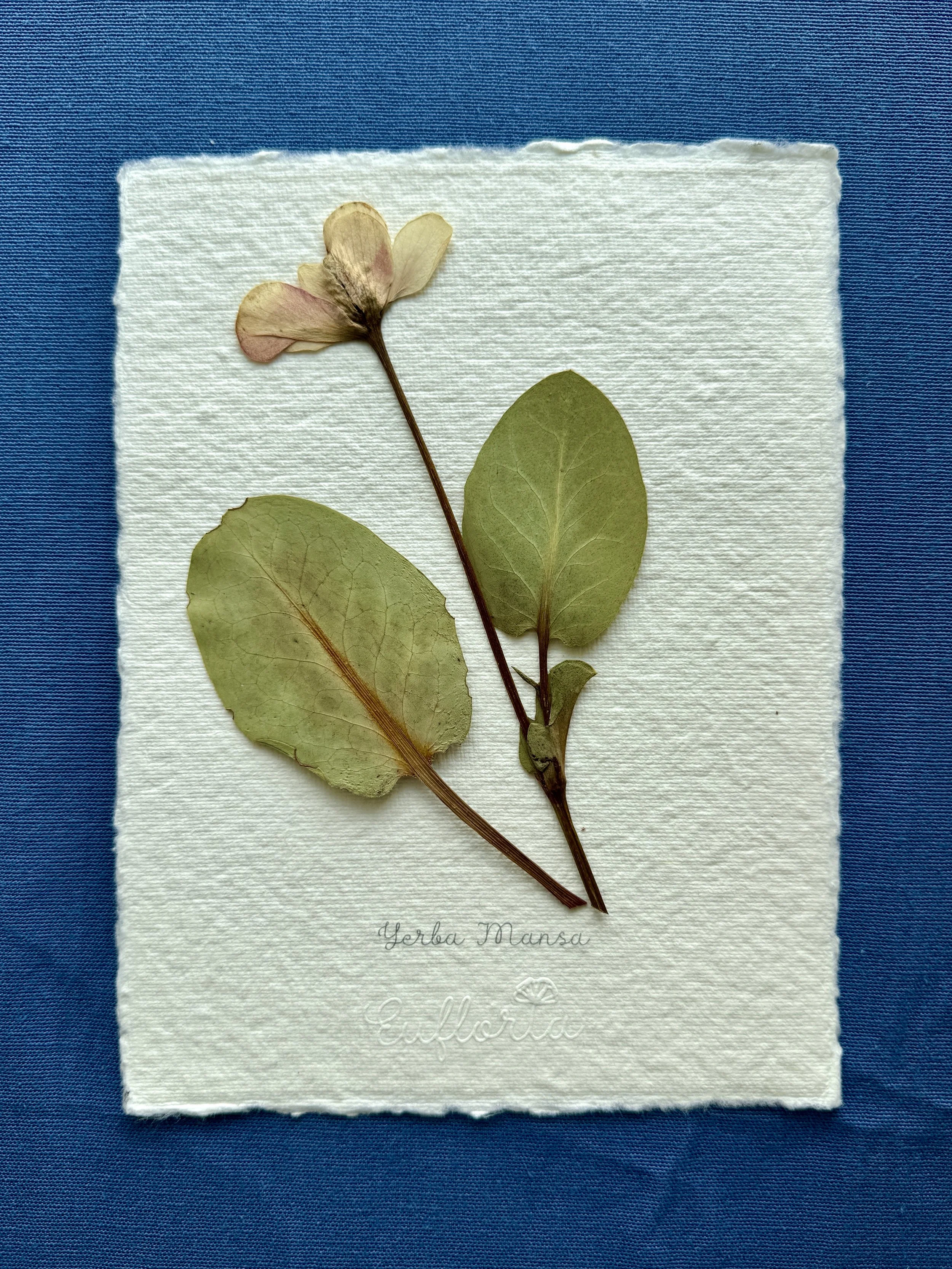
Leonora Curtin’s dedication to honoring traditional plant wisdom continues to inspire many of us working at the intersection of art, ecology, and cultural storytelling. Her work sparked the vision behind my own Medicine Plants Collection — a series of framed botanical artworks made with carefully pressed medicinal plants collected throughout the Southwest.
Each piece in the collection is created with the same spirit of reverence that guided Curtin’s ethnobotanical studies. The plants are pressed by hand, arranged with artistic intention, and framed as ready-to-hang botanical art for the home. These curated, themed pieces are designed to celebrate the beauty and resilience of Southwestern flora while inviting viewers to reconnect with the land they come from. Through art, I continue her work—honoring the plants, the stories, and the cultures that shaped them.
Bring the Spirit of Southwestern Medicine Plants Into Your Home
If Leonora Curtin’s legacy speaks to you as deeply as it does to me, I invite you to explore the Medicine Plants Collection and Botanical Sheets. Each piece is handcrafted using real pressed plants gathered from the landscapes she loved. The Collections are framed pieces with multiple plants in one frame, ready to hang. Or choose Botanical Sheets to make your own single frame or gallery wall.
Whether displayed as a gallery wall, given as meaningful gifts, or used to bring natural warmth into a living space, the Medicine Plant Collection pays homage to the very plant traditions Leonora sought to preserve.
Explore the Medicine Plants Collection and find the piece that resonates with your own connection to the land.